
A Pennsylvania father’s complaint about a teacher’s handwritten feedback on his second-grade son’s math assignment became a national debate over how educators should correct young students.
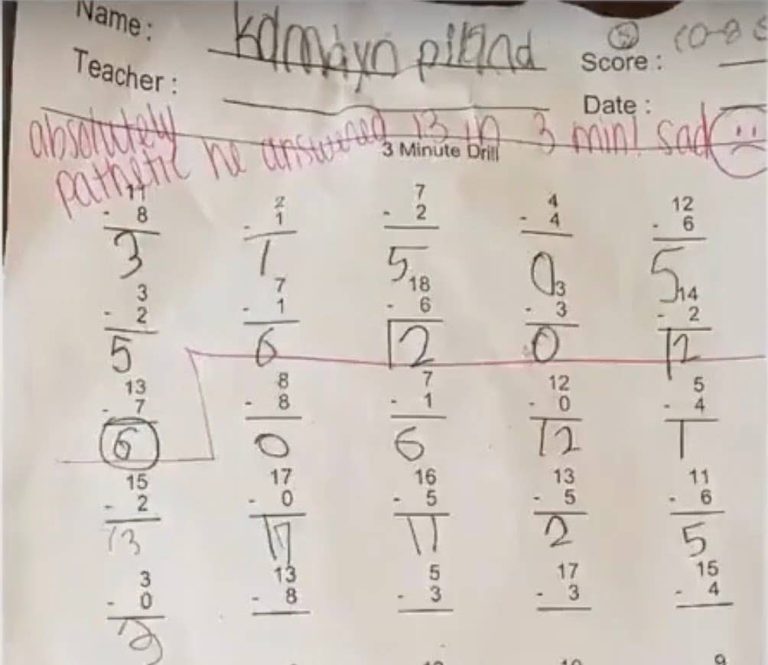
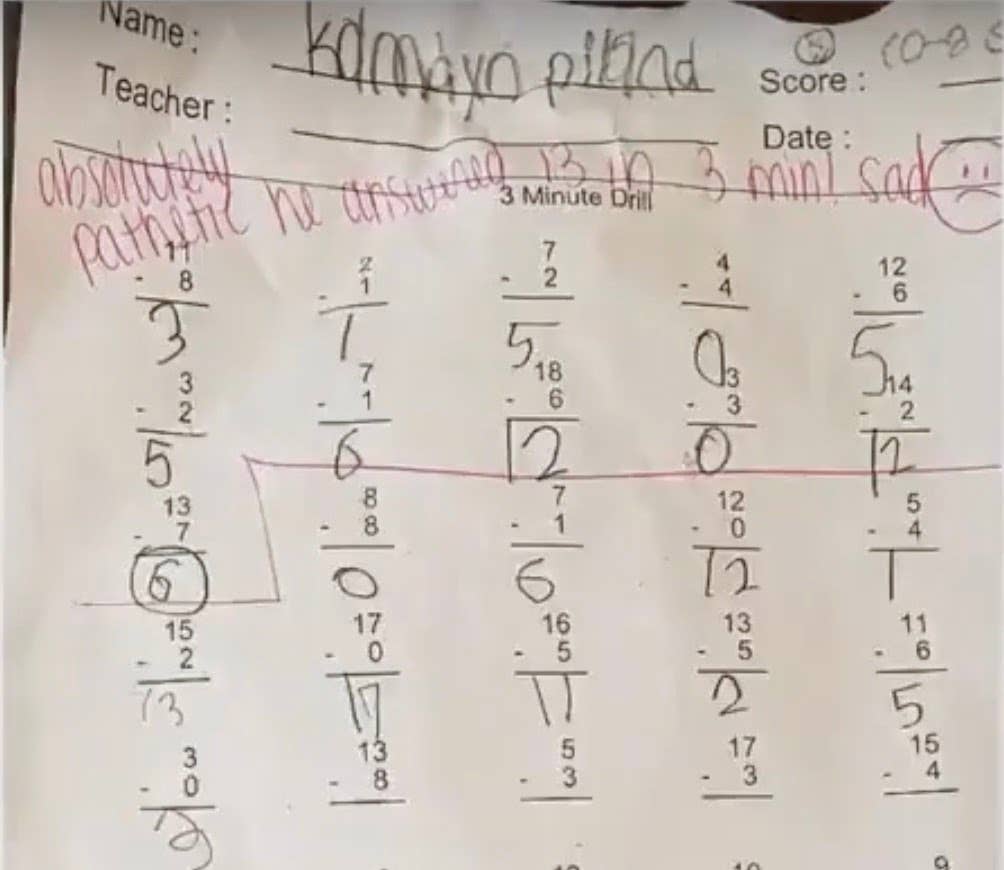
Chris Piland said his son, Kamdyn, was asked to complete as many subtraction problems as possible from a set of 600 during a three-minute exercise. The boy answered 13. A photograph shared by the father showed a note on the paper calling the result “absolutely pathetic,” followed by a sad face.
A classroom concern becomes a public campaign
Piland argued that the message was demeaning rather than constructive and launched an online petition calling for the teacher’s dismissal. The petition drew more than 15,000 signatures as the image circulated widely on social media.
The father later said the Valley View School Board was reviewing the matter. Superintendent Rose Minniti declined to litigate the personnel question through social media, saying the district’s response would be guided by evidence and its obligations to both students and employees.
Correction versus humiliation
Timed math practice is commonly used to measure fluency, but specialists distinguish between documenting performance and attaching a judgment to a child’s effort. Effective feedback tells a student what was correct, what needs work and what step to try next. A label that attacks ability or effort can instead create shame and anxiety.
The viral reaction also illustrates the complications created when a school dispute moves online. Parents have a legitimate interest in advocating for their children, while districts must follow personnel rules and protect student privacy. A public petition can bring attention to a concern, but it cannot substitute for a documented investigation.
The central question is larger than a single worksheet: how should adults respond when a child struggles? Firm expectations and honest correction can coexist with respect. For young students in particular, feedback is most useful when it is specific, actionable and focused on the work—not the child’s worth.
Related video report
Digital Dredger independently rewrote this report from cited source material. Allegations are described as allegations unless established in court.